
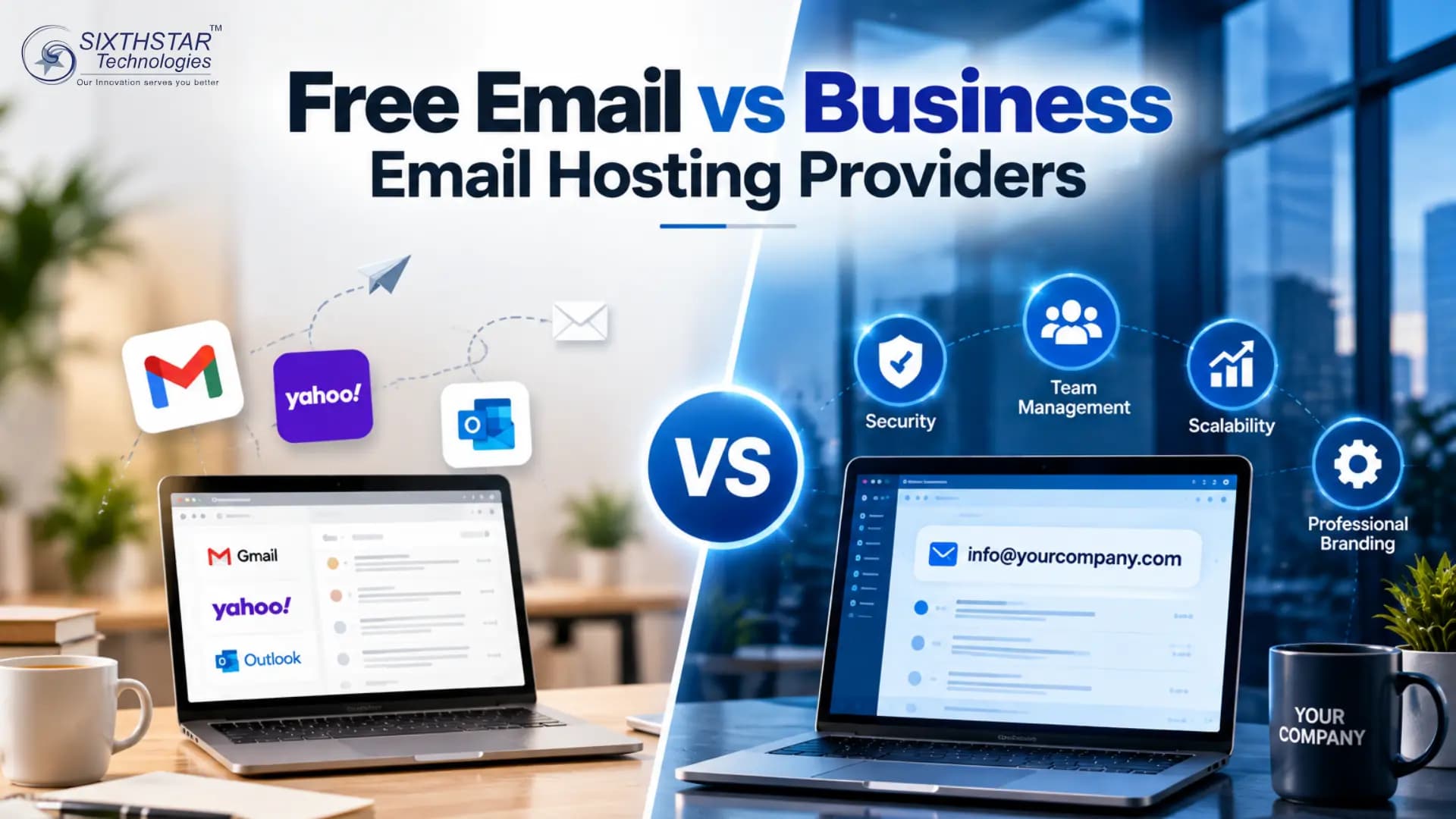
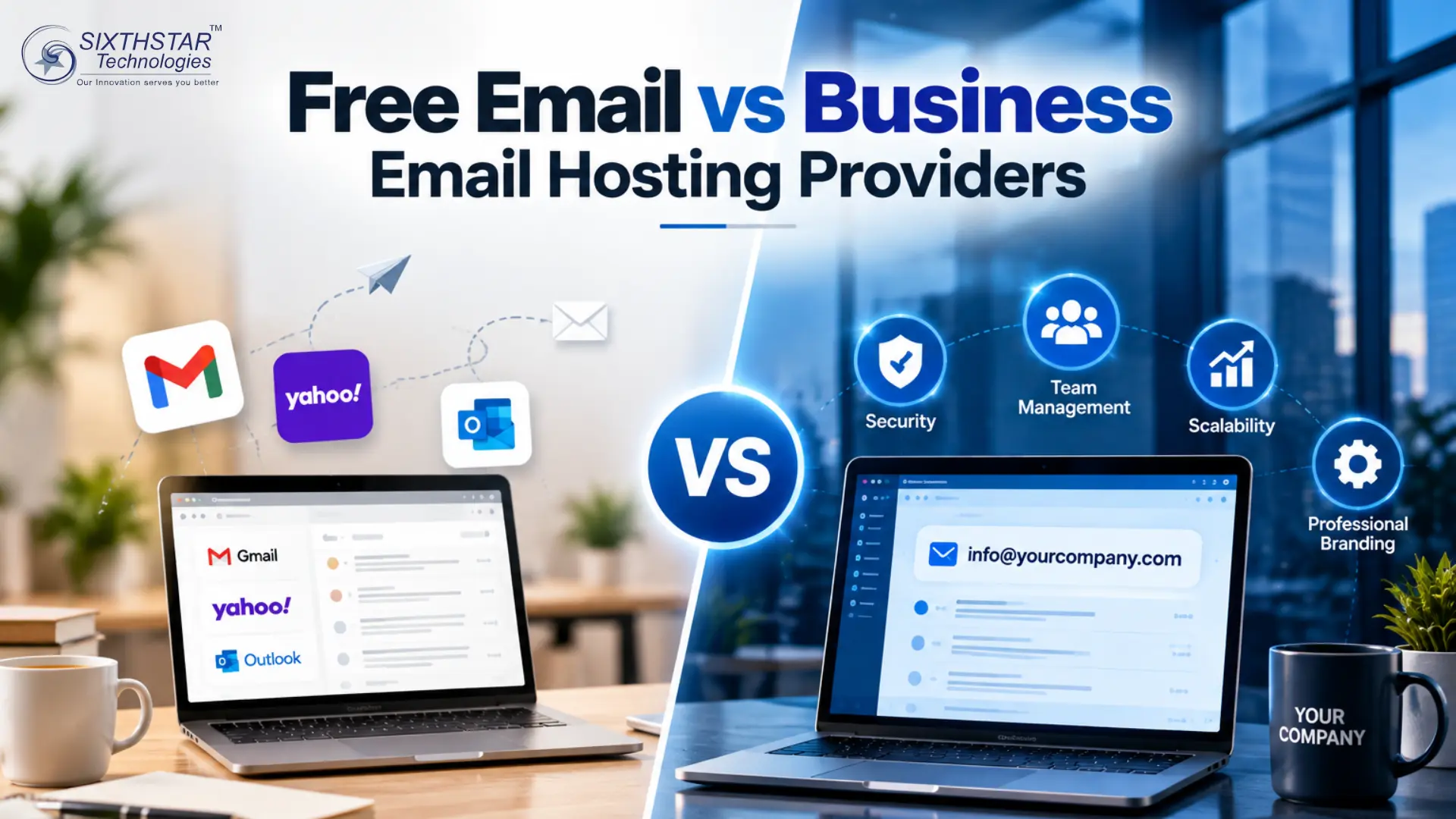
Email is an important part of everyday business communication. Companies use email to communicate with customers, share documents, manage enquiries, and coordinate with employees. Choosing the right email service can help businesses maintain professional communication and manage their emails more effectively.
Many businesses start with free email accounts because they are easy to create and require little initial investment. However, as a company grows, it may need better control over its email accounts, a professional business identity, and features that support its communication requirements. This is where business email hosting becomes a useful option.
Understanding the differences between free email accounts and business email hosting providers can help companies choose a solution that suits their needs.
What Are Free Email Accounts?
Free email accounts are email services that individuals and businesses can use without paying a regular subscription fee for basic features. These services are commonly used for personal communication, registrations, and everyday email exchanges.
They are easy to set up and generally do not require technical knowledge. This makes them suitable for individuals, freelancers, and small businesses that are just starting.
However, free email accounts may offer limited administrative control, business-specific features, and custom domain options, depending on the service. Businesses should review the provider's terms and available features before using a free account for professional communication.
Advantages of Free Email Accounts
- Low initial cost: Basic email services are generally available without a subscription fee.
- Easy setup: Users can create an account and start sending emails quickly.
- Convenient access: Emails can usually be accessed through web browsers and mobile applications.
- Suitable for personal use: Free accounts work well for everyday communication and individual requirements.
Although free email accounts are convenient, businesses with growing communication needs may require more control and professional features.
What Is Business Email Hosting?
Business email hosting is a service that allows companies to manage email accounts for their business, often using a custom domain name. For example, an employee could use an address such as sales@yourcompany.com instead of a generic email address.
A company-domain email address helps maintain a consistent brand identity when communicating with customers, suppliers, and business partners.
Depending on the provider and plan, business email hosting may include administrative controls, mailbox management, spam filtering, security features, storage options, and technical support.
Businesses should compare these features carefully because the services offered can differ between providers.
Advantages of Business Email Hosting
- Professional identity: Use email addresses associated with your company domain.
- Centralised management: Manage employee email accounts through administrative tools, depending on the service.
- Security features: Access available protection features such as spam filtering and authentication controls.
- Business scalability: Add or manage email accounts as your team grows, according to the selected plan.
- Support options: Choose a provider that offers suitable technical assistance and service support.
For companies that depend on email for customer communication, selecting the right business email hosting service can help establish a more organised communication process.
Free Email vs Business Email Hosting: Key Differences
Features | Free Email Accounts | Business Email Hosting |
Email Address | Usually uses the email provider's domain | Uses your company's custom domain |
Professional Branding | Limited business branding | Supports consistent company branding |
Cost | Usually free for basic features | Generally requires a paid subscription |
Account Management | Often designed for individual users | May include centralised administration tools |
Security Features | Features vary by provider | May include additional business-focused security controls |
Storage Capacity | Depends on the provider's free plan | Depends on the selected hosting plan |
Technical Support | Support options vary by provider | May include dedicated or priority support, depending on the plan |
User Management | Business-wide management may be limited | May support creating and managing employee accounts |
Scalability | May have limitations for growing teams | Plans may allow businesses to add users as needed |
Best Suited For | Personal use and basic email requirements | Businesses that need professional email and administrative controls |
Free Email vs Business Email Hosting Providers: Key Differences
Both free email accounts and business email hosting support email communication, but they serve different requirements. The right choice depends on a company's size, budget, security needs, and professional goals.
1. Professional Branding
Free email accounts commonly use the provider's domain name. Business email hosting allows companies to use their own domain, creating consistent email addresses across departments.
For example, a business can create addresses such as info@yourcompany.com, support@yourcompany.com, and sales@yourcompany.com.
This makes it easier for customers to identify the department they need to contact and helps maintain a consistent brand identity.
2. Security and Email Protection
Email security is important for businesses that exchange customer information, financial documents, contracts, and internal files.
Free email services may include basic security features, but the available controls vary by provider. Business email hosting plans may offer additional administrative and security options.
When comparing providers, businesses should review spam and malware filtering, multi-factor authentication, account recovery, data protection policies, and available email authentication features.
No email service can eliminate every security risk, so employees should also follow safe email practices.
3. Account and User Management
Managing email accounts becomes more complicated as a company hires additional employees or creates new departments.
With business email hosting, administrators may be able to create and disable accounts, manage access, and configure email settings from a central interface.
These capabilities depend on the selected provider and plan. Businesses should confirm that the available management features meet their requirements.
4. Storage and Business Features
Email storage limits, attachment sizes, integrations, and additional productivity tools can vary significantly between services.
Free accounts may be sufficient for users with basic requirements. Businesses that exchange large files or manage a high volume of emails may prefer a paid plan with suitable storage and business features.
Before choosing a provider, estimate your team's mailbox requirements and check the plan's storage limits, attachment restrictions, and available integrations.
5. Cost and Long-Term Value
Free email accounts can help businesses minimise initial expenses. However, companies should also consider the value of professional branding, administration, security controls, support, and scalability.
Business email hosting usually involves a subscription fee. The actual cost depends on the number of users, storage requirements, included features, and billing terms.
Instead of choosing a service based only on price, compare the features included in each plan and determine whether they support your business needs.
How to Choose the Right Business Email Hosting Provider
Choosing among business email service providers requires more than comparing subscription prices. Businesses should evaluate their communication requirements and identify the features they need now and in the future.
Consider the following factors before making a decision.
1. Check Your Business Requirements
Determine how many employees need email accounts and how your team uses email. Consider whether you need departmental addresses, shared mailboxes, calendar integration, or additional collaboration tools.
Understanding these requirements will help you shortlist suitable providers.
2. Review Security Features
Look for providers that offer appropriate security controls, spam filtering, account protection, and administrative settings.
If your business handles sensitive information, review the provider's data protection policies and available security documentation before subscribing.
3. Compare Storage and Pricing
Review the mailbox storage, attachment limits, number of accounts, and other features included in each plan.
Check whether the price changes when you add more users or renew your subscription. This helps you estimate the long-term cost of the service.
4. Evaluate Technical Support
Email interruptions can affect customer communication and daily operations. Check the provider's support channels, support hours, response commitments, and troubleshooting options.
Choose a service that offers a level of support appropriate for your business.
5. Consider Future Growth
Your email requirements may change as your business expands. Select a provider that makes it practical to add users, manage accounts, and upgrade services when required.
A scalable solution can help you avoid unnecessary disruption when your communication needs increase.
Why Email Hosting for Business Matters
Email remains an important communication channel for customer enquiries, sales discussions, project updates, and business transactions. A suitable email hosting solution helps companies manage this communication according to their operational needs.
Using a custom domain can support a professional brand identity, while appropriate administration and security features can help businesses manage their accounts more effectively.
For small businesses, startups, and established companies, the key is to choose an email service that balances cost, usability, security, and management capabilities.
When comparing email hosting for business, evaluate the actual features provided rather than assuming that every paid service offers the same benefits.
Common Mistakes to Avoid When Choosing an Email Provider
Businesses can make better decisions by avoiding a few common mistakes.
- Choosing only by price: A low-cost plan may not include all the features your business requires.
- Ignoring security: Review the provider's security controls before creating business accounts.
- Overlooking storage limits: Check mailbox capacity and attachment restrictions to avoid unexpected limitations.
- Not checking support options: Confirm how you can get help when technical issues occur.
- Ignoring scalability: Make sure the service can accommodate additional users if your business grows.
- Failing to review renewal terms: Understand subscription pricing, renewal conditions, and any additional charges.
Comparing these factors in advance can help you select a service that meets your company's current and future requirements.
Conclusion
Free email accounts can be a practical choice for personal communication and businesses with basic requirements. However, companies that need custom domain addresses, centralised account management, and business-focused features may benefit from business email hosting.
When evaluating business email service providers, consider security, storage, administrative controls, technical support, scalability, and overall cost. The right solution should match your business requirements without adding unnecessary complexity.
Looking for reliable Email Hosting for Business?
Sixthstar Technologies offers email hosting solutions to support professional business communication. Explore the available services and choose an option that fits your company's email requirements.
Contact the Sixthstar Technologies team to discuss your business email hosting needs and find a suitable solution for your organisation.
About the Author
Admin
A passionate writer and tech enthusiast sharing insights and knowledge on the latest trends and innovations.
Elevate Your Digital Presence
Have a question or feedback? Reach out to our experts today and discover how we can help you grow.
